
Among the Sensex stocks, JSW Steel, Asian Paints, Maruti Suzuki India, NTPC, Adani Ports and Special Economic Zone, Bharti Airtel, ITC and Tech Mahindra were the major gainers. Reliance Industries, Tata Motors, Infosys, Mahindra and Mahindra, Bajaj Finance and Axis Bank were the laggards.

Benchmark BSE Sensex declined for the fourth day in a row on Wednesday due to selling in financial and banking shares and the government's move to hike securities transaction tax and short term capital gains tax. The 30-share BSE Sensex declined 280.16 points or 0.35 per cent to settle at 80,148.88 with 19 of its components closing lower and 11 with gains. During the day, it tumbled 678.53 points or 0.84 per cent to 79,750.51.

The number of foreign tourists coming to India grew a modest four per cent between January and December 2013, coinciding with women travellers' perception on the country as a safe destination hitting rock bottom.
The stock exchange BSE has called off the merger of its unit at the Gujarat International Finance Tec-City International Financial Services Centre (GIFT IFSC), India International Exchange (India INX), with NSE International Exchange (NSE IX), a similar unit floated by rival National Stock Exchange (NSE), according to sources familiar with the development. BSE and NSE had been in discussions for the merger for over a year, but it has yielded no results, they said.

'We were exporting copper at that time. Now India is importing copper to the tune of around $1.2 billion. Moreover, there was a larger impact on the dependent MSMEs.'

Benchmark BSE Sensex rebounded sharply by 941 points while NSE Nifty closed above the 22,600 level on Monday on the back of buying in banking and infra shares and a global stocks rally. The 30-share BSE Sensex jumped 941.12 points or 1.28 per cent to settle at 74,671.28. During the day, it zoomed 990.99 points or 1.34 per cent to 74,721.15.
If Hindenburg or its partner do not join the investigation, then Sebi may pass an ex-parte order against it, which may be enforced as a foreign award in US courts.

ITC, State Bank of India, HCL Technologies and IndusInd Bank were the other big laggards. NTPC, UltraTech Cement, HDFC Bank and Mahindra & Mahindra were among the gainers.

Among the Sensex firms, Hindustan Unilever, Reliance Industries, Infosys, Asian Paints, ITC and UltraTech Cement were the major gainers. State Bank of India, JSW Steel, Axis Bank, ICICI Bank, Tata Steel and Tata Motors were among the laggards.

'If you see another 1000-point correction, people may start panicking.'

'With tuition fees for international students rising, education loans have become critical for bridging the gap between savings, scholarship, and full cost.'
'We emphasise the importance of not basing investment decisions solely on electoral outcomes.' 'Instead, focusing on investing in high-quality businesses capable of prospering regardless of the political landscape is paramount.'

Market benchmarks Sensex and Nifty wilted under selling pressure on Friday after a five-day rally as investors pared exposure to banking, financial and consumer durable stocks amid mixed trends in global markets. Rising global crude prices, a depreciating rupee and persistent foreign fund outflows further weighed on sentiment, traders said.

An analysis by the Securities and Exchange Board of India (Sebi) has revealed that retail traders remain at the wrong end of the stick when it comes to equity derivatives trading. About 93 per cent of them incurred an average loss of Rs 2 lakh (per trader) during the last three financial years. The new report highlights an increase in the loss-making individual investors in futures and options (F&O) to 91.1 per cent in FY24 compared to 89 per cent in FY22.

From the Sensex basket, Sun Pharma, Maruti, Power Grid, Titan, JSW Steel, Tech Mahindra, Larsen & Toubro and State Bank of India were the major laggards. Tata Motors, Tata Consultancy Services and Nestle were the gainers.

Disclose foreign assets, redesignate NRO a/c and open a Resident Foreign Currency a/c to park forex earnings
Clamping down on the delays in repatriating foreign exchange earnings, the Reserve Bank of India (RBI) has tightened norms for special economic zones (SEZs), asking them to realise and bring back full value of goods and services to India within a year from the date of export.
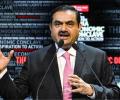
Gautambhai has shown that he has ability to withstand payment delays or vexatious court cases. That is where he is on a more comfortable wicket than many others. A revealing excerpt from R N Bhaskar's Gautam Adani: Reimagining Business in India and the World.

From the Sensex basket, JSW Steel, Tata Steel, UltraTech Cement, NTPC, Larsen & Toubro and HDFC Bank were the major gainers. Titan, Nestle, Bharti Airtel and IndusInd Bank were among the laggards.

Domestic institutional investors pumped Rs 2.3 trillion into equities during H1 CY24. Of this, mutual funds contributed 80%.

The ED probe into alleged money laundering by crypto exchange WazirX and the subsequent squabbling among its promoters has revealed the 'darker side' of cryptocurrencies, a top government source said on Thursday. The source added that people should exercise caution in absence of a regulation to govern cryptocurrencies and so-called exchanges trading in them. "Caution is the word that should be in the minds of the people dealing with crypto. "In the episode of WazirX, people got to know many darker sides, caution is necessary in crypto transaction," the source said.
Budget should be a platform for govt to take bold steps.
Titan, UltraTech Cement, Bajaj Finserv, Reliance Industries, ITC and NTPC were among the other major laggards. Tata Motors, State Bank of India, Hindustan Unilever, Power Grid, Tech Mahindra and Tata Consultancy Services were the gainers.
'There is a weak link between the economy and the stock market.'
From the Sensex basket, Kotak Mahindra Bank jumped 5 per cent after the company reported a 25 per cent growth in its March quarter net profit at Rs 5,302 crore, limited by a drop in the core income due to narrow interest margins. Tata Consultancy Services, Hindustan Unilever, Mahindra & Mahindra, Sun Pharma, Tech Mahindra and IndusInd Bank were among the other major gainers. Titan tanked 7 per cent after its March quarter earnings failed to cheer investors.

Large Indian IT services companies are expected to report "muted" sequential show in a traditionally strong second quarter, as macroeconomic challenges continue to weigh on global discretionary spending, say market watchers. The big earnings week for tech heavyweights is up ahead, with Tata Consultancy Services (TCS) scheduled to announce its results on October 11, and both Infosys and HCL Technologies on October 12. Wipro is slated to declare its Q2FY24 results next week, on October 18.
RBI recently hiked LRS limit to $125,000 or Rs 7500,000 as on Aug 19 with $/rupee rate of 60

Market players attribute the rally in small and midcaps to flows from retail investors and domestic institutions.
From the Sensex basket, Maruti, Mahindra & Mahindra, NTPC, JSW Steel, Larsen & Toubro, Reliance Industries, Axis Bank, and Power Grid were the major gainers. Nestle, Wipro, Tata Consultancy Services, HDFC Bank, Titan, HCL Technologies and Infosys were the laggards.
India's aviation industry could return to profitability in 2023-24 for the first time since the pandemic. The industry may pare aggregated net loss by 75-80 per cent year-on-year (YoY) to between Rs 3,500 crore and Rs 4,500 crore in 2022-23 (FY23), compared with Rs 17,500 crore of net losses in 2021-22 (FY22). A combination of recovery in passenger volumes and easing cost pressures due to stable fuel and foreign exchange (forex) costs could spark a turnaround. CRISIL says domestic and international passenger traffic recovered to 90 per cent and 98 per cent, respectively, of pre-pandemic traffic (2019-20, or FY20), in April-December 2022, compared with April-December 2019.

'IPOs have performed exceptionally well, with a notable increase in average ticket size from Rs 800 crore in the last financial year to around Rs 1,300 crore in this financial year.'

Liquidity in the banking system has slipped into a deficit for the first time in three weeks, prompting banks to borrow the largest quantum of funds from the Reserve Bank of India (RBI) in around a month and a half. The key catalyst for the sudden tightening in liquidity was due to outflows on account of advance tax payments, which occur towards the end of a quarter. Analysts also cited other factors such as a currency leakage and possible interventions by the RBI in the foreign exchange market, which contributed to the tighter liquidity conditions.

Among the Sensex firms, Kotak Bank, PowerGrid, ICICI Bank, HDFC Bank, PowerGrid were the major gainers. HUL, TCS, M&M, IndusInd Bank, HCL Tech were among the losers.
Reliance Industries was the biggest gainer in the Sensex pack, rising 2.69 per cent, followed by HCL Tech, ICICI Bank, Tata Motors, Wipro, IndusInd Bank, JSW Steel, Wipro, Tata Consultancy Services and Titan. In contrast, NTPC, Power Grid, UltraTech Cement, Axis Bank, Infosys and Nestle were the major laggards.
Among the Sensex firms, Power Grid, Kotak Mahindra Bank, Tech Mahindra, Bajaj Finserv, ITC, Bharti Airtel, Nestle, NTPC, Bajaj Finance, Reliance Industries, Infosys and HDFC Bank were the major gainers.
From the Sensex basket, Tech Mahindra, Tata Steel, JSW Steel, HCL Technologies, Tata Consultancy Services, Larsen & Toubro and Kotak Mahindra Bank were the biggest laggards. Mahindra & Mahindra, Power Grid, Bajaj Finance, IndusInd Bank and Maruti were the major gainers.

Investors should view the increase in the LTCG tax rate in conjunction with the increase in capital gains exemption from Rs 1 lakh to Rs 1.25 lakh, which will provide some relief.
.jpg)
Relaxation in visa regime with introduction of visa-on-arrival enabling electronic travel authorisation (ETA) for 43 countries was a high point for the Tourism Ministry in 2014.
The depreciation in the yuan has led to a decline in all emerging market currencies

Petrol doped with 20 per cent ethanol was rolled out on Monday at select petrol pumps in 11 states and union territories as part of a programme to increase use of biofuels to cut emissions as well as dependence on foreign exchange-draining imports. At present, 10 per cent ethanol is blended in petrol (10 per cent ethanol, 90 per cent petrol) and the government is looking to double this quantity by 2025. Prime Minister Narendra Modi launched the higher 20 per cent ethanol blended petrol two months ahead of the planned rollout in April, at the India Energy Week (IEW) 2023 in Bengaluru.
 © 2026 Rediff.com - Advertise with us - Disclaimer - Privacy Policy - Sitemap - Feedback - About us - Terms of use - Grievances